Dryer vent cleaning and replacement, bird proofing, and small exterior repairs on the third and fourth floors — where ladders can't reach and lifts can't fit.
See services ContactWalk any block in Lincoln Park, Lakeview, Wicker Park, or Logan Square and look up. Three- and four-story buildings, wall to wall: greystones, brick walk-ups, courtyard buildings, six-flats. Somewhere on the upper floors of nearly every one of them is a small problem nobody has fixed — a dryer vent that hasn't been cleaned since installation, birds nesting behind a vent hood, a downspout opening turned into a nest, a strip of flashing lifting at the parapet. The repair itself is small. Getting to it is the whole problem.
These buildings sit on 25-foot lots with a gangway on each side that fits a person and nothing else. The back wall faces an alley with no room for a lift to set up. Courtyard buildings wrap around interior courts no boom can enter. A 40-foot ladder doesn't safely reach a fourth-floor vent even where there's somewhere to stand it — and across most of the North Side, there isn't. The usual answer is scaffolding or lift rental costing several times more than the repair — so the repair waits, year after year.
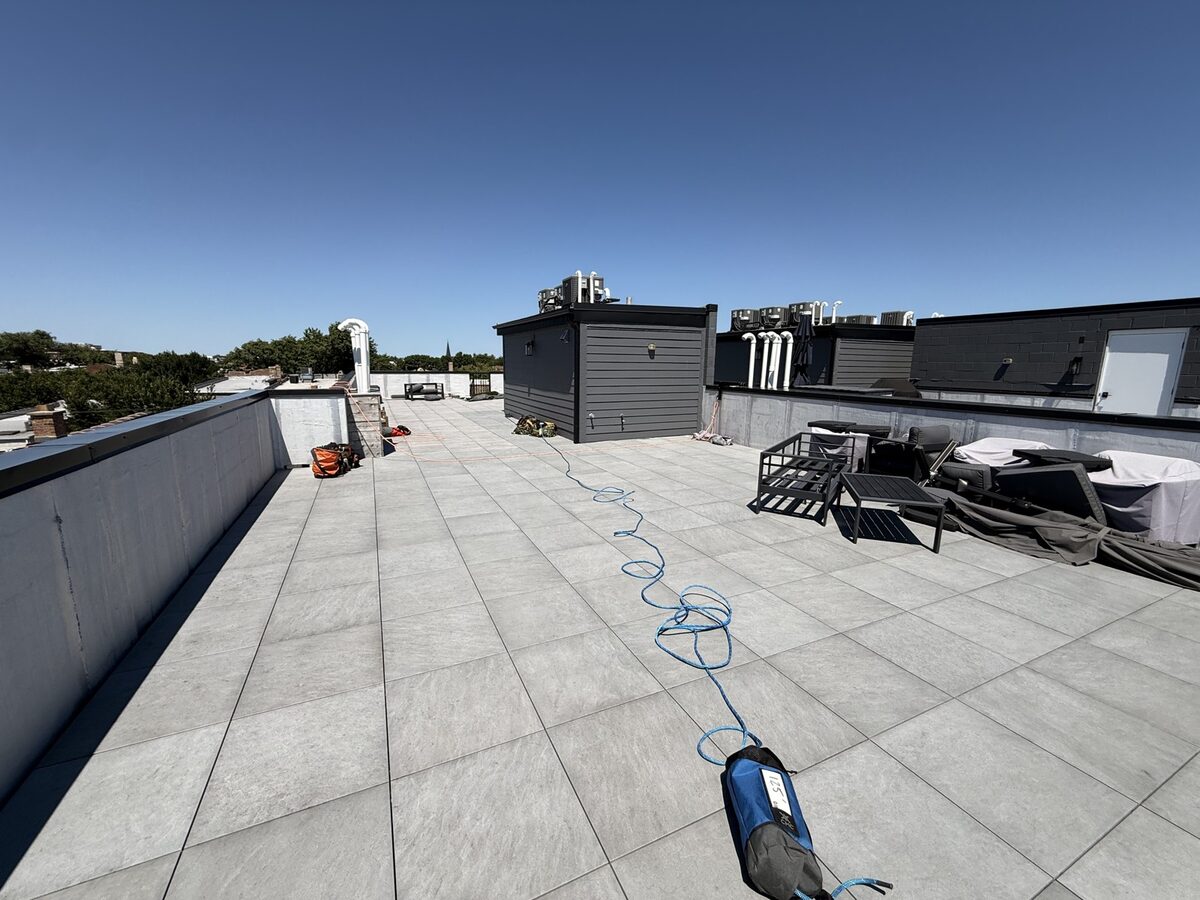
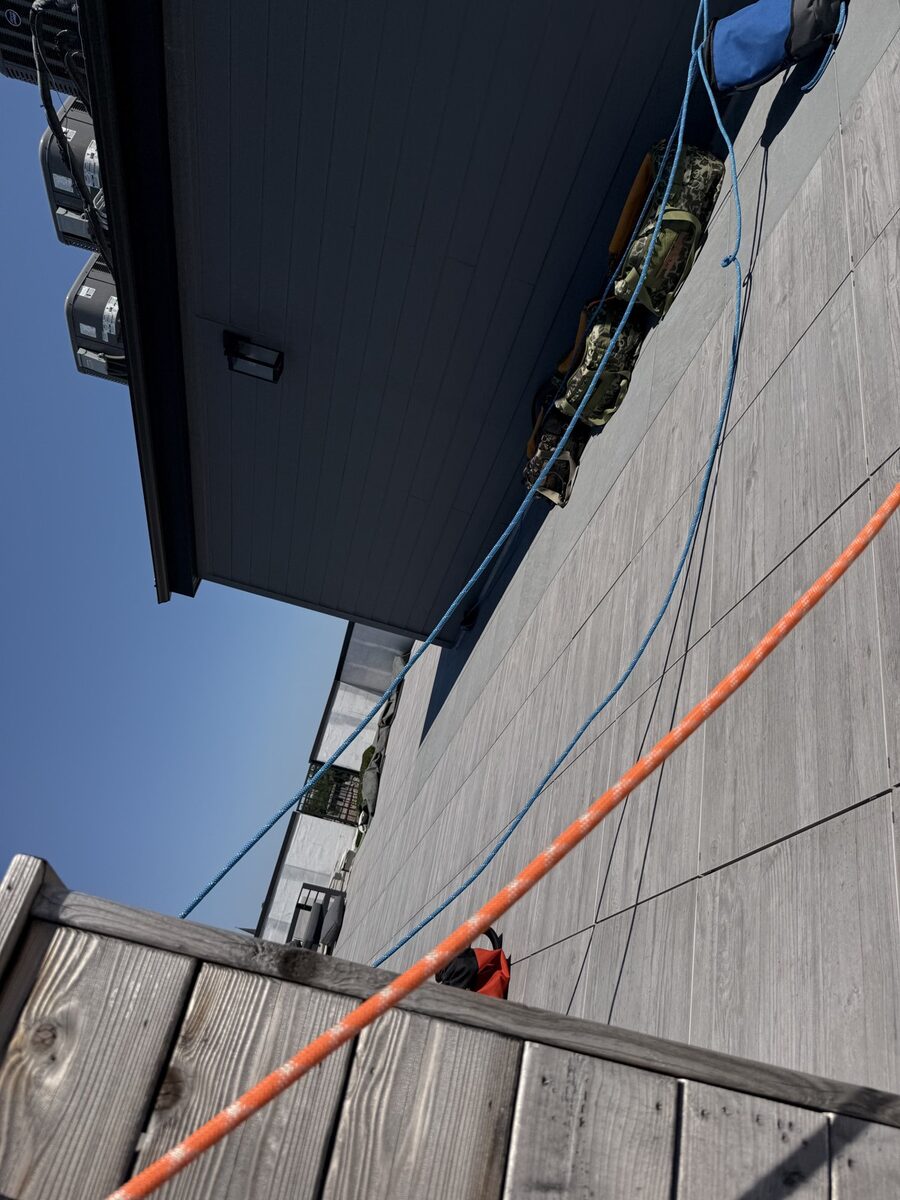
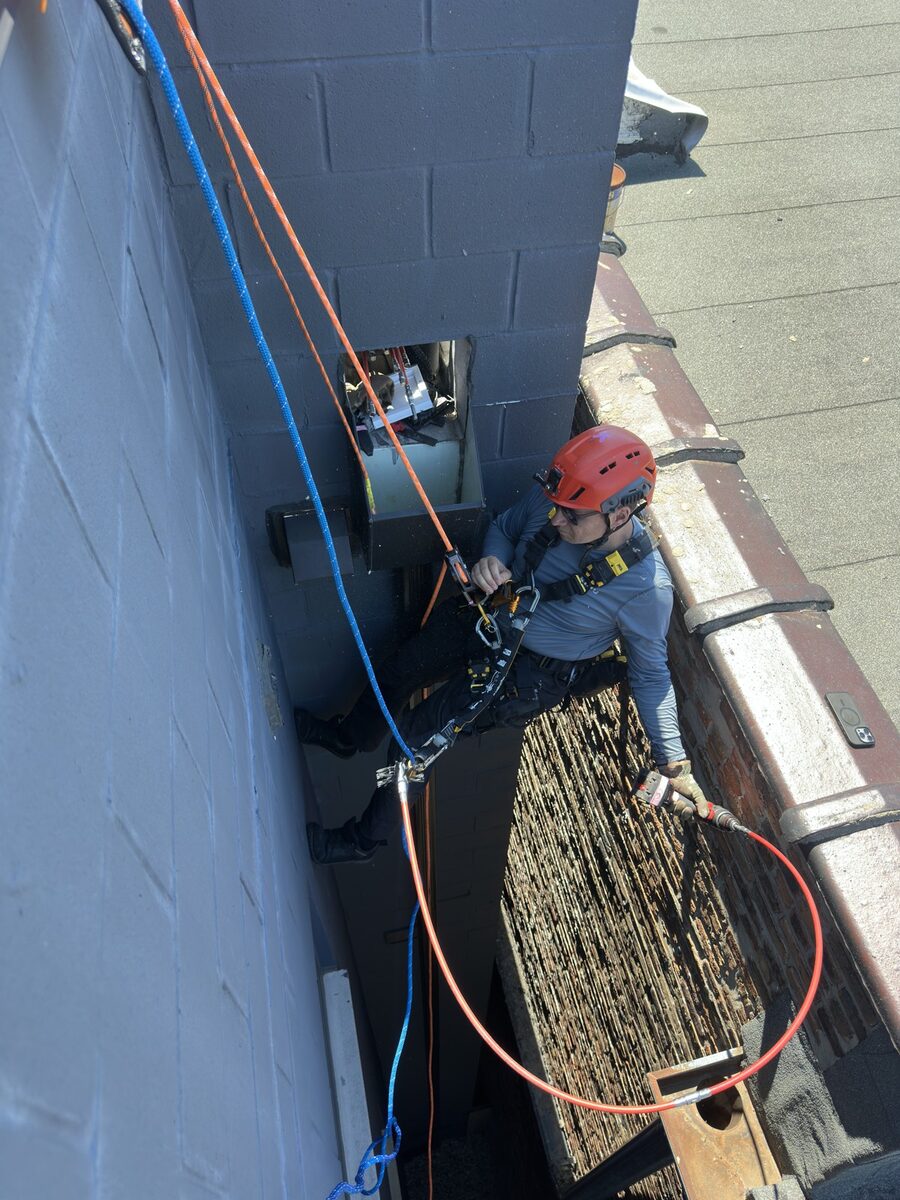
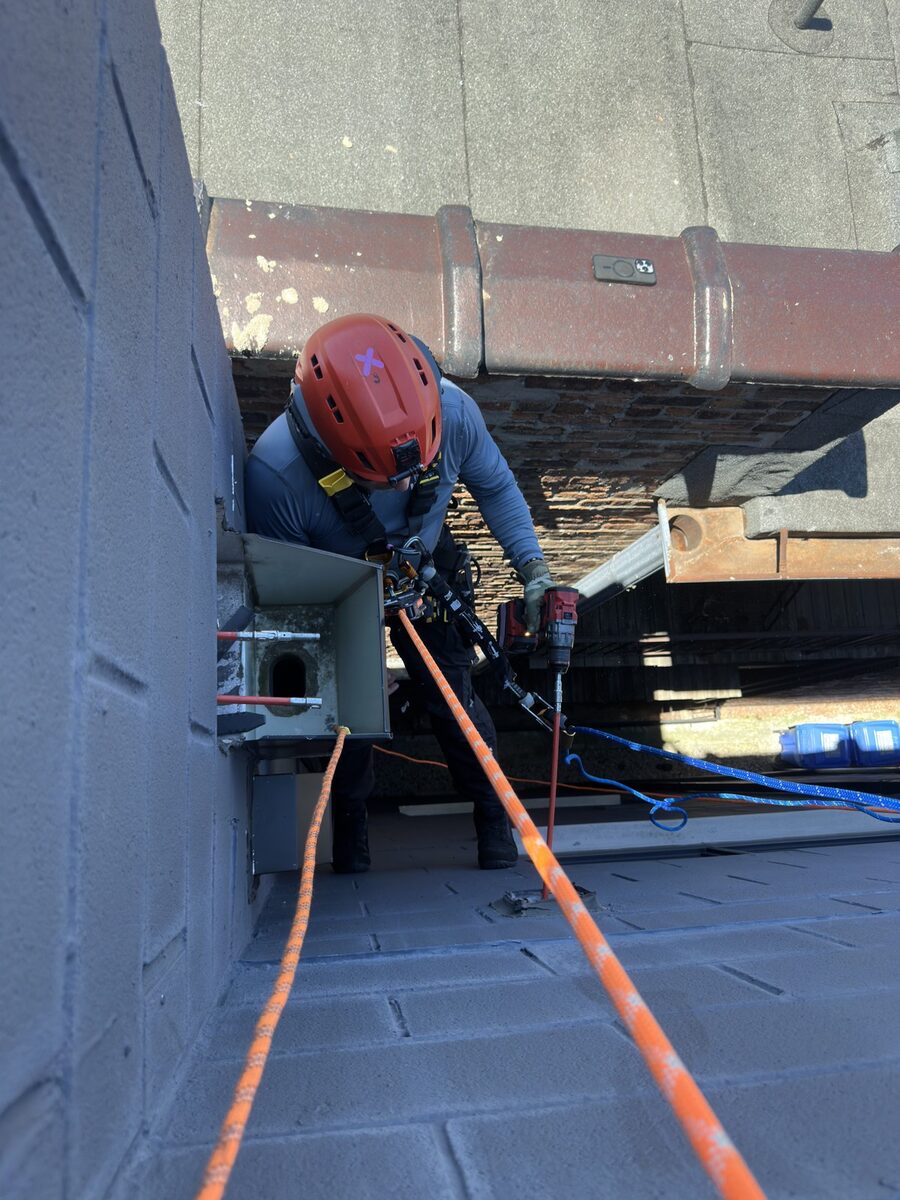
Rope access solves this the direct way. A trained technician anchors at the roof, rappels down the face of the building to the work area, completes the repair, and is gone the same day. No scaffolding, no lift on the parkway, no equipment that couldn't fit down the gangway anyway. It's the same industrial technique used on high-rise facades, scaled to the buildings Chicagoans actually own.
Small, high-up repairs that are hard to reach, not hard to do — the jobs where access is the real cost. Every job includes photo documentation: you see exactly what was up there and exactly what was done.
A clogged dryer vent is a fire hazard and the reason a dryer runs three cycles per load — and when the vent exits a wall on the third or fourth floor, most vent-cleaning companies simply decline the job. We rappel directly to the vent exit, clean the termination and accessible duct, clear lint buildup and nests, and photograph the result. One of the most common calls in Chicago's walk-ups and condo buildings.
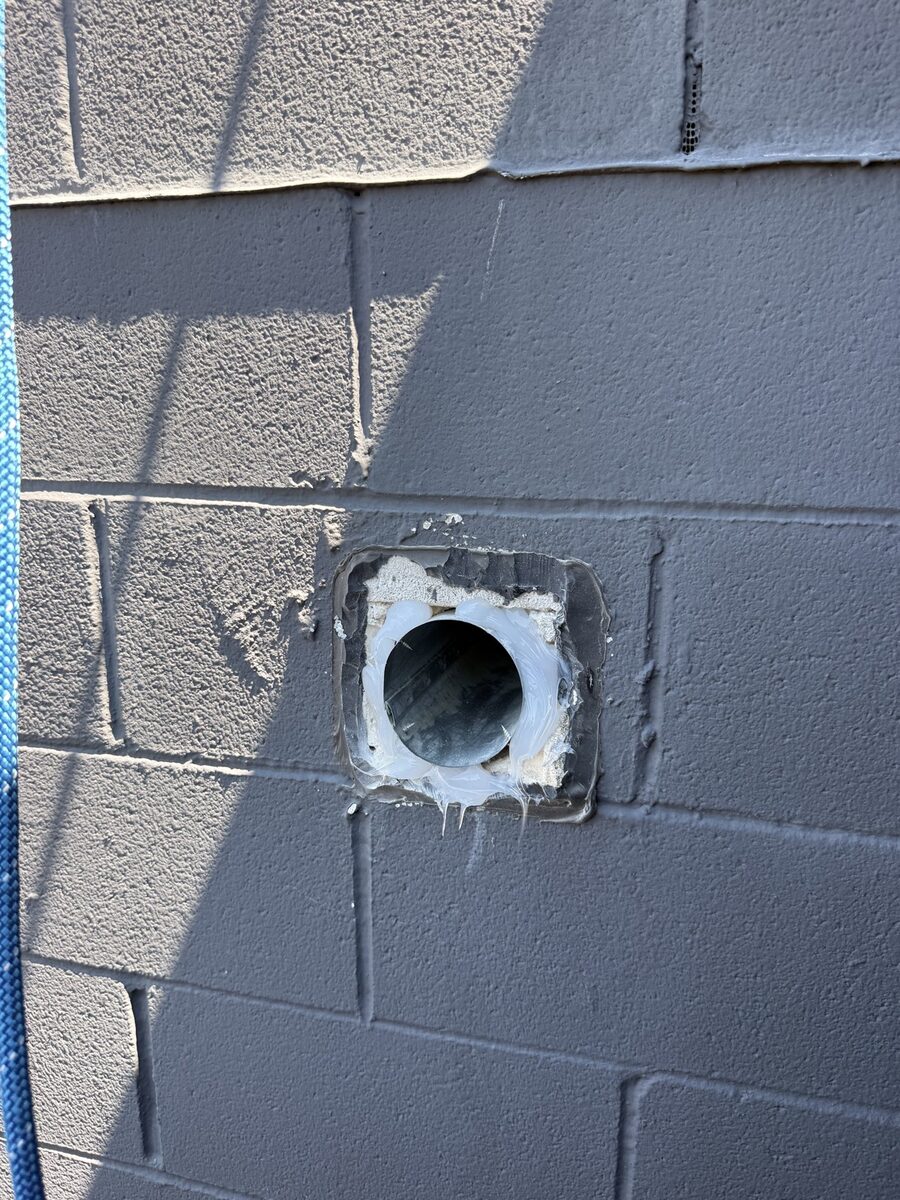
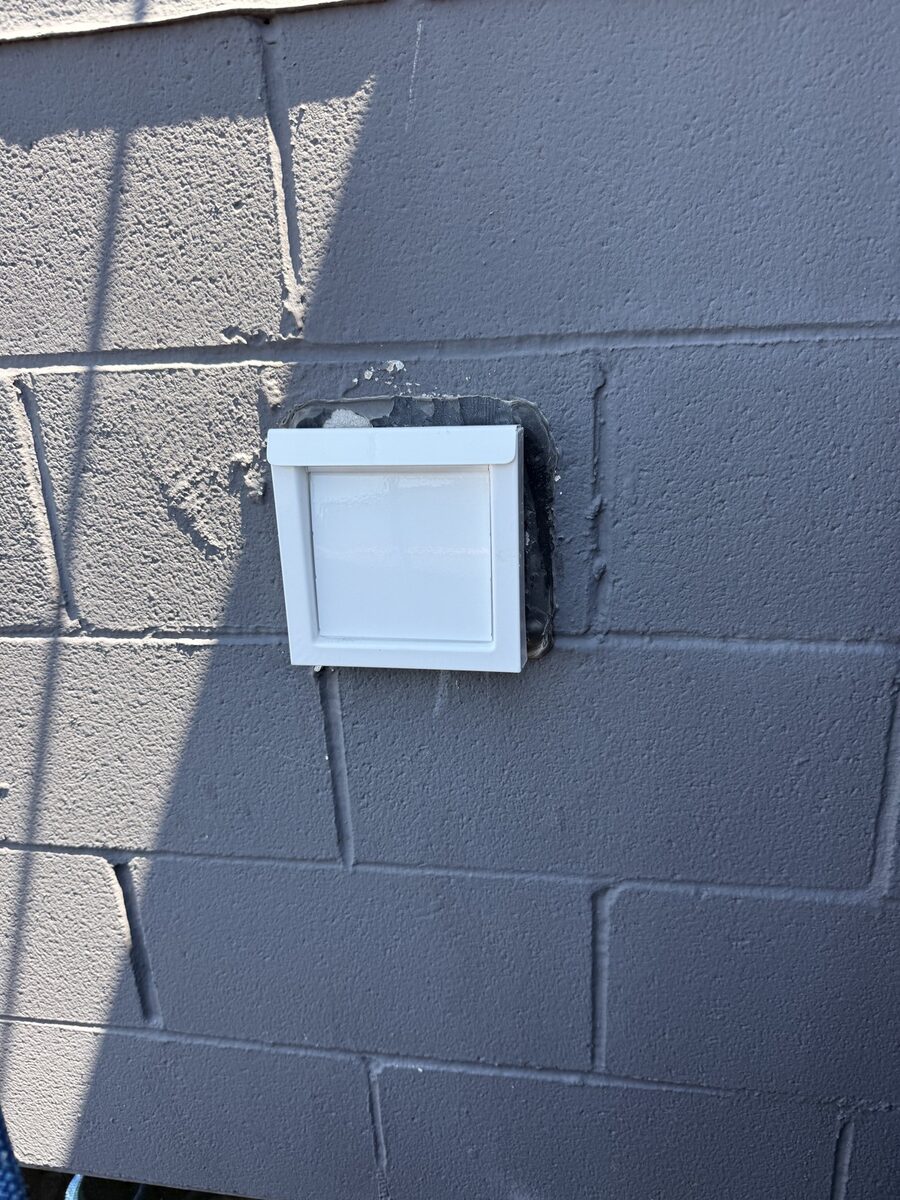
Cleaning doesn't help a vent that's physically failed. Crushed or corroded termination hoods, missing flaps that let cold air and birds straight in, plastic hardware that should never have been installed — we replace the termination and hardware at the wall and finish with a proper guard, at any height on the building. One descent, done right, documented.
If birds can enter it and only a rope can reach it, we proof it: dryer vents, bathroom and kitchen exhaust vents, fresh-air intakes, attic and gable vents, and downspout openings. Nests block airflow and drainage, foul the wall below, and return every spring until the opening is properly excluded. We install screens and guards matched to each vent type — protection without choking airflow.
Lifted flashing, failed caulk joints, and open seams at parapets, wall caps, and roof edges let water into the building envelope — almost always in the hardest spot on the building to reach. We re-seat and seal flashing, renew sealant joints, and close water entry points on rope, without staging equipment.
Chicago masonry weathers from the top down: parapets and upper courses take the worst of the freeze-thaw cycle. We handle spot repairs — repointing deteriorated joints, securing loose brick, and documenting conditions — on upper walls where scaffolding would cost more than the fix.
Resecuring pulled-away gutter runs, resealing joints, reattaching downspouts, and clearing problem sections on alley-facing and courtyard-facing walls where nothing wheeled can set up. We work from the roof down, so ground obstacles stop being the reason it never got fixed.
Sometimes the job is simply knowing what's up there. We rappel the face and photograph parapets, flashing lines, vent terminations, and wall conditions up close — useful before buying a building, planning masonry work, presenting to an association board, or verifying someone else's repair.
Kobicos works across the City of Chicago, concentrated in the neighborhoods where three- and four-story buildings dominate the block — the housing stock rope access was made for.
Greystones and brick four-flats with rooftop decks, high dryer vents, and gangway-only side access.
Dense walk-up blocks off Belmont and Clark where upper vents and gutters go unserviced for decades.
Historic rowhouses and brick multi-flats with ornate upper facades worth documenting up close.
Vintage four-story homes and small condo buildings tucked between towers — too short for facade crews, too tall for ladders.
Loft conversions and low-rise brick buildings with alley-facing walls no lift can park under.
Mixed vintage and new construction on tight lots — side walls reachable only through the gangway.
Classic brick three-flats with original vents and downspouts, prime nesting territory every spring.
Boulevard greystones and corner buildings with tall parapet lines and weathered upper masonry.
Loft buildings with high vent exits and masonry details far above ladder height.
Brick two- and three-flats with rear porches and alley walls where access equipment has no room.
Greystone rows with upper-course masonry taking the worst of the freeze-thaw cycle.
Courtyard buildings and vintage co-ops with interior courts no boom lift can enter.
Elsewhere in Chicago — or in the nearby suburbs? If the repair is out of reach, get in touch through the contact section; we'll tell you honestly whether it's a fit.
Rope access is an established industrial technique used on high-rise facades, bridges, and towers. Technicians work on two independently anchored lines — a working line and a separate backup — with equipment inspected before every descent and a rescue plan in place. On a three- or four-story Chicago building, the same system applies at smaller scale.
Yes — that vent is exactly what rope access is for. The technician anchors at the roof, rappels directly to the vent exit, and cleans it in place. Height stops being the reason it never gets serviced.
Both. When a termination is crushed, corroded, missing its flap, or was never right to begin with, cleaning doesn't fix it — we replace the termination hood and hardware at the wall and install a proper guard, at any height on the building.
Any vent birds and pests can enter where the only access is by rope: dryer vents, bathroom and kitchen exhaust vents, fresh-air intakes, attic and gable vents, and downspout openings. Screens and guards are matched to the vent type so airflow is preserved.
Sometimes that's the right call — for large-scale work over a whole facade, it usually is. But for a small repair, access equipment often costs several times more than the repair itself, and on many Chicago lots it physically cannot reach the wall in question: gangways are too narrow, courtyards are enclosed, and alleys have no setup room. Rope access needs a roof and an anchor point, not a parking spot.
Rigging is padded and rope is protected at every edge contact. Part of the assessment before any descent is choosing anchor points and a descent path that protect the building — and since every job is photographed before and after, the condition record works in your favor.
Three-flats, four-story walk-ups, greystones, courtyard buildings, and small condo buildings — the classic Chicago stock. What we need is a workable anchor situation at the roof. If a building isn't a fit, we'll say so when you describe it, before anyone's time is spent.
Yes, and it's a natural fit: every job includes photo documentation, so the board sees exactly what was found and exactly what was done. That makes approvals, records, and follow-up work straightforward.
Typical pricing: rope setup runs around $1,000, which covers rigging the ropes at one location on the building — with an additional charge if the ropes need to be moved to reach another spot. The work itself is priced on top of the setup: dryer vent cleaning about $250, vent cover installation about $200, bird proofing around $200. Because the setup is the biggest part of the cost, it pays to bundle: once the ropes are rigged, adding a second repair on the same descent costs only the price of that service.
We do small repairs at height, not major construction. Full roof replacement, whole-facade tuckpointing, and structural rebuilds need a different crew and different staging. For work outside our scope, we'll point you to the right contractor — our recommendations are in the contact section.
Chimney, fireplace, masonry, and dryer vent work — serving Chicago's North Shore since 2017, with masons and inspectors on staff and more than 1,100 Google reviews. Inspections are documented diagnostic appointments: video, photos, and written findings. chimneymonkey.com
Call Chimney Monkey: 847-994-4388Exterior cleaning and maintenance — window cleaning, gutter cleaning, roof soft washing, and solar panel cleaning — serving Palatine and Chicago's North Shore. panepal.us
Call Pane Pal: 224-458-2496Typical rope-access pricing: setup runs around $1,000 (one rig location; additional charge if the ropes move), with services priced on top — dryer vent cleaning about $250, vent cover installation about $200, bird proofing around $200.